WHEN SOFTWARE
ISN'T ENOUGH.
Some products live entirely on a screen. Others involve sensors, enclosures, radios, batteries, physical devices and decisions made in real time. From sensor to screen — designed as one system.
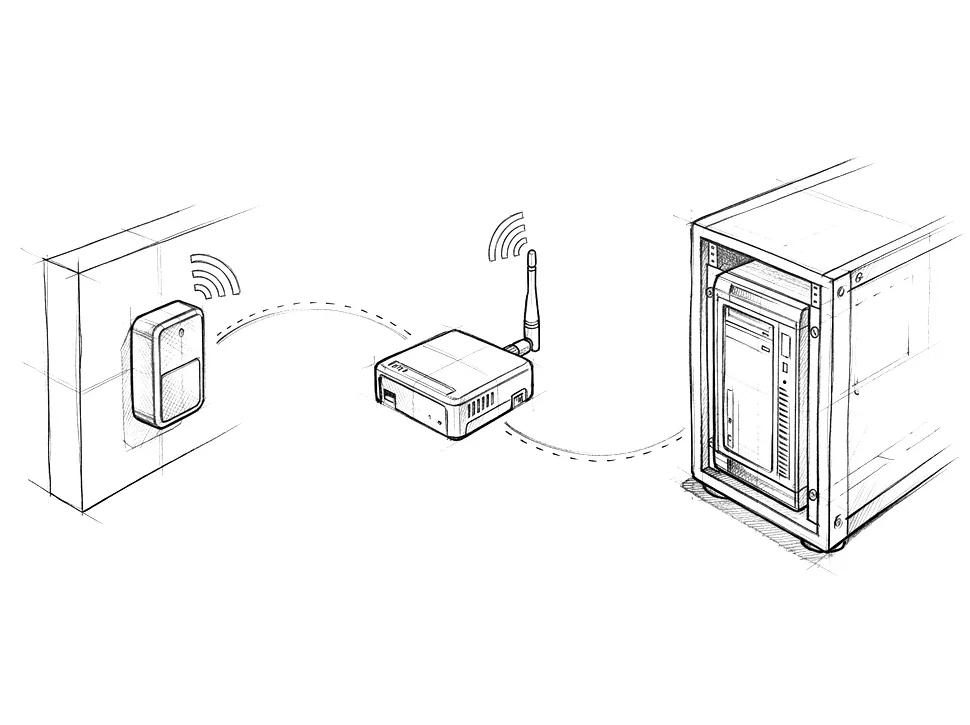
FROM SENSOR TO SCREEN.
A connected product fails at the seams — between the device and the radio, the radio and the cloud, the cloud and the app, the app and the person holding it. Those seams are where one mind is worth more than five suppliers.
Complex doesn't scare me.
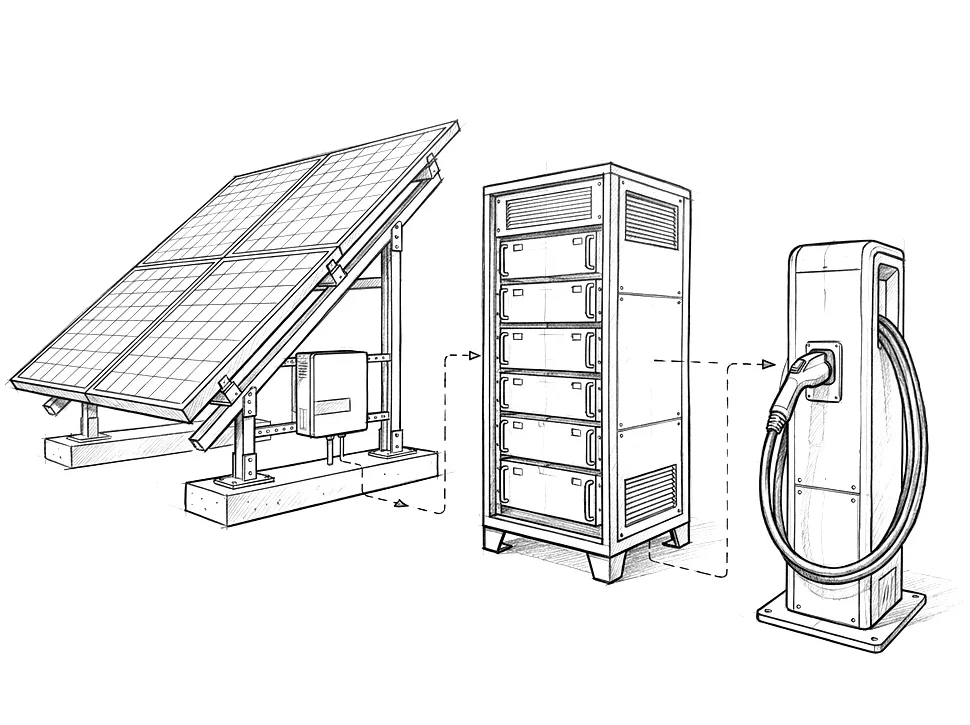
Some products involve batteries, solar production, EV charging, forecasts, tariffs and hardware that has to keep working when the network doesn't.
The approach is the same: understand the system as a whole, then decide what the user should ever have to think about.
sensors · edge processing · gateways · cameras · energy systems · telemetry · real-time control
One system, decided in the right order
Hardware decisions are expensive to reverse. So they're made after the questions, not before.
What must be true
Range, power budget, environment, cost per unit, certification. The constraints that quietly decide everything else.
The system on one page
Device, radio, cloud, app and user — how data moves, what happens offline, who decides what.
Something real, early
A working device and a working app, even if rough. Physical products reveal their problems by existing.
Form and packaging
Enclosure, materials, the box it ships in. Designed alongside the electronics, not bolted on afterwards.
THE HARDEST PART ISN'T THE HARDWARE.
It's deciding what the product should do automatically, what it should ask, and what it should never bother anyone with. A connected product that needs a manual has already failed.
Before you ask
The short version. Everything else — just ask.
Do you make the hardware too?
The product thinking, electronics direction, enclosure and system architecture stay with me. Manufacturing partners are brought in where it makes sense — the design intent doesn't get handed away with them.
We already have a device. Can you do the rest?
Often that's the best starting point. An existing device with a weak app, weak cloud or weak product logic is usually the fastest thing to make dramatically better.
Which radio should we use?
That depends on range, power, cost and what the product must do when the network is down. It's an outcome of the questions, not the starting point.
Can we start small?
Yes. A prototype from €3,000 excl. VAT can test the one hypothesis that matters before the expensive decisions get made.
FROM SENSOR TO SCREEN.
Device, connectivity, cloud and app — thought through as one product.
TELL ME ABOUT THE PRODUCTNo polished brief required. Don't let the budget stop the conversation.